Why She Wants You to Plan the Trip, Not Just Book It (The Psychology, Explained)
The real reason your girlfriend or wife wants you to initiate the trip, not just show up for it, backed by research on cognitive labor, gift psychology, and memory, plus how hiring a travel concierge still counts.
Elaine Brackin
7/8/20266 min read
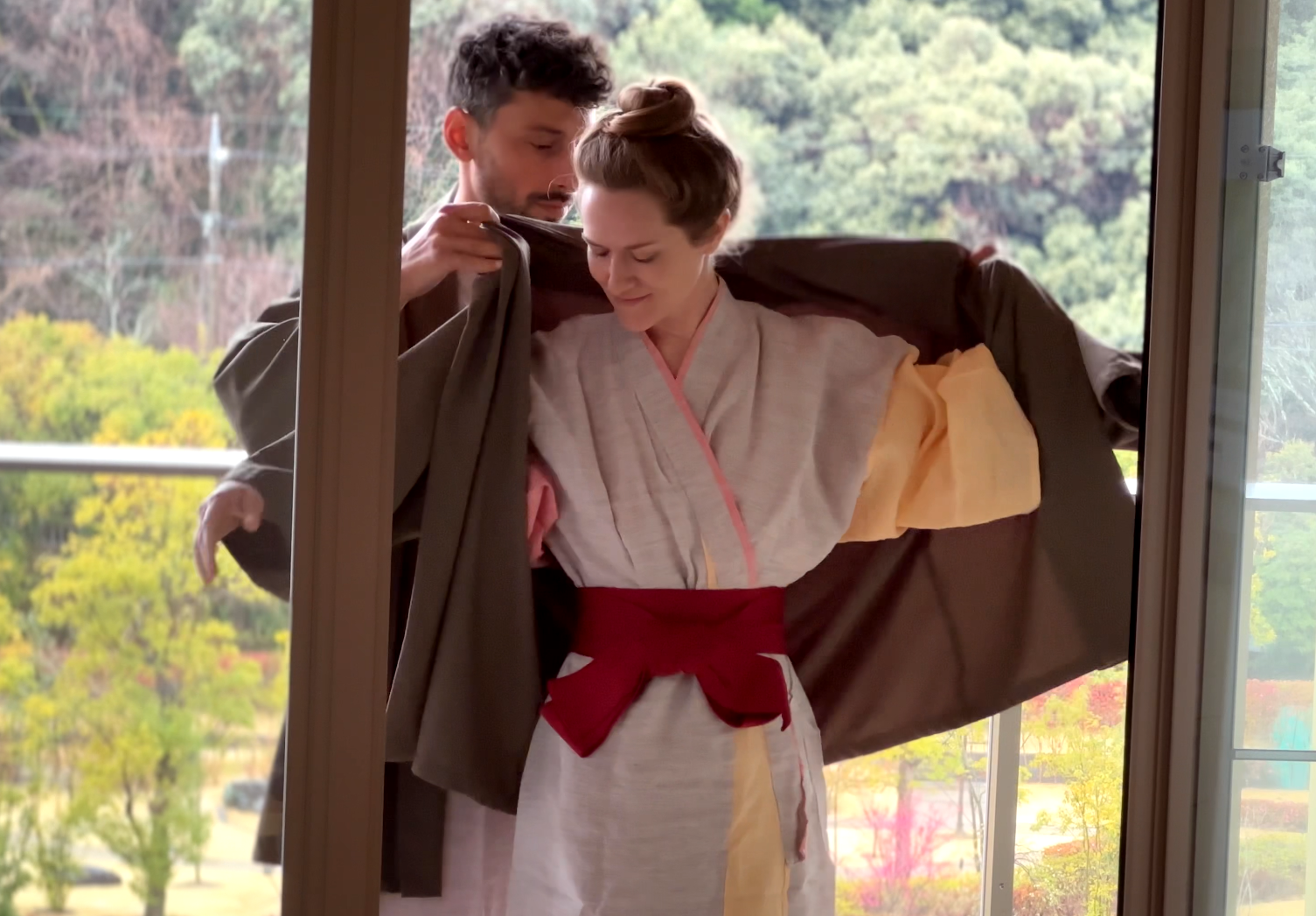
Why She Wants You to Plan the Trip, Not Just Book It
Ask her what she wants for your anniversary and she'll say nothing, she's fine, don't make a fuss. Believe that answer at your own risk. You're trusting the part of her brain built for small talk, not the part keeping score.
Why "I don't need anything" isn't the real answer
A guy named Martin Lindstrom once spent three years and seven million dollars hooking people up to brain scanners to figure out why we buy what we buy. His finding, in a nutshell: what people say they want and what actually lights up their brain are often two completely different things. Ask someone a direct question and you get the polite, conscious answer. The real preference lives somewhere deeper, in what researchers call somatic markers, the gut-level associations built from experience, not the ones assembled on the spot for your benefit. Translation: her "I'm fine, really" is not data. It's manners.
Also, none of this is exclusive to men and their girlfriends. Swap the pronouns and the same math applies if you're the wife who's always the one who remembers the anniversary reservation. This is about roles, not gender. It just happens that a lot of men ask me this exact question, so that's who I'm talking to today.
The real reason she wants you to be the one who thought of it
A sociologist named Allison Daminger spent years studying who does the invisible thinking that keeps a household running, not the dishes, the thinking: noticing what's needed, researching the options, deciding, following up. Her research, published in the American Sociological Review, breaks it into four stages, and one pattern shows up again and again regardless of income or zip code. The anticipating and the following up disproportionately land on one partner. The other gets looped in at the decision stage, after someone else already did the noticing. Vacation planning, specifically, keeps showing up in later research as one of the clearest examples of this exact pattern: one person doing all the invisible thinking while everyone else just shows up with a suitcase.
So when she says she doesn't care about the trip, she probably means she's tired of being the one who has to notice a trip is overdue. That noticing is the actual gift.
Does it still count if you hire someone to help plan it?
Yes, and here's the research that explains why. Evolutionary psychologists who study what's called costly signaling have found that gifts work as proof of commitment specifically because they cost something real, money, time, effort, something that can't be faked. Gift-giving in relationships is linked to lower breakup rates for exactly this reason: a real cost is hard to bluff. The cost that actually counts here was never the three hours you'd have spent scrolling hotel reviews at midnight. It's that you decided this was worth resourcing properly.
Handing the curating and the booking to someone else doesn't erase that signal. If anything, it keeps the whole idea from getting half-finished out of exhaustion, which is its own kind of tell. If you already know the city and just need the right hotel booked, that part costs you nothing, hotels pay me, not you, and being the one who books it usually means I can get you the upgrade, the resort credit, or the early check-in you would not get booking it yourself. I can also handle the one detail that actually makes it feel like your idea when she walks in: a note from you, waiting in the room, timed to arrive before you do. You keep the part that actually matters, which is that you called first.
Why planning this is good for you too, not just her
Researchers at the University of Zurich found that the brain lights up in regions tied to altruism and happiness the moment a person plans to give a gift, before a cent has been spent. Other research on generosity backs this up: giving triggers a dopamine hit, and over time, oxytocin, the same chemical behind trust and long-term bonding, which sticks around a lot longer than a dopamine spike does. You are not doing this as a favor to her. You are doing it because, biologically, it feels good to be the one who thought of something first.
How to make the trip more memorable, without making it longer or more expensive
You won't be remembered for the whole trip. Daniel Kahneman's research on memory, known as the peak-end rule, found that people judge an entire experience almost entirely by its best moment and its final moments, not the average of the whole thing. A four day trip with one great night and a graceful goodbye morning beats a ten day trip that was merely fine the whole way through. Building that one peak moment on purpose is exactly what a good curator does with a trip. It's the least DIY-able part of the whole plan, and the part most worth paying someone else to get right.
The easiest part to get right: how you actually tell her
This is the part most men skip, and it costs almost nothing. Research on rituals, from Harvard Business School behavioral scientist Ovul Sezer and her collaborator Michael Norton, has found that adding even a small, deliberate ritual around an experience measurably increases how much people enjoy what follows, and couples who build small rituals into their relationship report more positive emotion and higher satisfaction than couples who don't. Telling her about the trip over dinner in a normal voice is not a ritual. Handing her something is.
Separate research on gift wrapping backs this up from another angle. Wrapped gifts are rated as more exciting and more thoughtful than the identical gift handed over unwrapped, and the longer someone takes to open something, the more valuable and considered they rate it afterward. The wrapping is not decoration. It's where a real chunk of the perceived effort actually lives.
None of this requires a Pinterest board. A wax-sealed envelope with a single itinerary card inside. A small box with a luggage tag already engraved with the date. A boarding-pass-style card tucked into the book on her nightstand. The trip is the gift. The reveal is the ritual that makes it register as one, and it's a small enough detail that I can help you put it together as part of the curation, at very little extra cost.
Full trip or staycation, either one works
That can mean a full trip, ten days along a coast and through a city she mentioned once, eighteen months ago, in passing, because you were actually listening. Or it can mean something smaller and closer to home: one very well-arranged night away, a room upgraded quietly in advance, a Saturday cleared without explanation, a reservation you didn't need her help getting. Same psychology, different price tag. What it needs is thought, not distance.
Quick answers
Does she actually want a surprise, or should I just ask her what she wants? Ask if you want to, but don't stop there. Her conscious answer rarely matches what actually lands emotionally. Treat it as one data point, not the whole plan.
Is it corny to hire a travel advisor to help plan something for my own girlfriend or wife? No. What actually reads as commitment is that you initiated it and resourced it, not whether you personally called every hotel yourself.
What if I have no idea what she'd actually like? That's what curation is for. Tell an advisor what you've noticed her mention, even once, in passing, and let the curating do the rest.
Is any of this only relevant to straight couples? No. It's about which partner defaults into doing the planning, not gender. The same psychology applies if you're the wife who's tired of always being the one who remembers everything.
Who booked the flight doesn't matter. Whose idea it was does.
I'm Elaine. American, ten years in this industry, ten years of serious travel before that. I plan proposals, honeymoons, staycations, and once in a lifetime trips for people who'd rather live the story than spend six weeks researching it. Think of me as the concierge behind this one. I handle the curating and the booking, down to the little reveal that makes it feel like a gift and not a reservation. You keep full credit for the idea. Based in Türkiye, working with clients everywhere. Tell me what she'd actually notice, and I'll take it from there.
If you want to read further:
Buyology: Truth and Lies About Why We Buy, Martin Lindstrom, book review and summary
The Cognitive Dimension of Household Labor, Allison Daminger, American Sociological Review, 2019
Spending Money on Others Promotes Happiness, Dunn, Aknin, and Norton, Science, 2008
Costly signaling theory in evolutionary psychology, overview
The Peak-End Rule, on Kahneman and Fredrickson's memory research
Why We Wrap Gifts: The Psychology of Surprise, on anticipation and perceived value