Two Egypts, One Journey
We didn't plan on Egypt being two completely different worlds. Makadi Bay gave us stillness and the Red Sea. Then a bus through the desert, a chaotic arrival, and Luxor gave us something we're still trying to name. This is what happened in between.
Elaine Brackin
3/17/20265 min read
We landed at 2am.
Hurghada airport at that hour is, against all odds, surprisingly calm. Visas sorted, bags collected, driver waiting, all within thirty minutes. We were in a small hotel before we had fully processed that we were in Egypt. We slept.
The next morning, the country introduced itself properly.
Our driver to Makadi Bay spoke no English. He opened with American pop, which felt polite but wrong. My husband asked for Amr Diab. The driver turned to look at him, a real look, the kind that means something, and the music changed. Just like that, the mood was set.
He drove like a man who had somewhere very important to be, weaving through Hurghada's morning chaos with total conviction. We stopped for petrol and watched another driver attempting to strap what appeared to be twenty suitcases to the roof of a small car. People walked barefoot along the roadside. The city was loud and layered and completely indifferent to us, which is exactly how a city should be.
An hour later, we passed through the resort security gate. And just like that, the noise switched off.
Makadi Bay is all-inclusive calm. The Red Sea here is an almost impossible shade of blue, the service is warm and unhurried, and the world beyond the gates feels very far away. We let it be far away. We floated. We ate slow lunches. We watched the light change on the water and did not feel guilty about any of it.
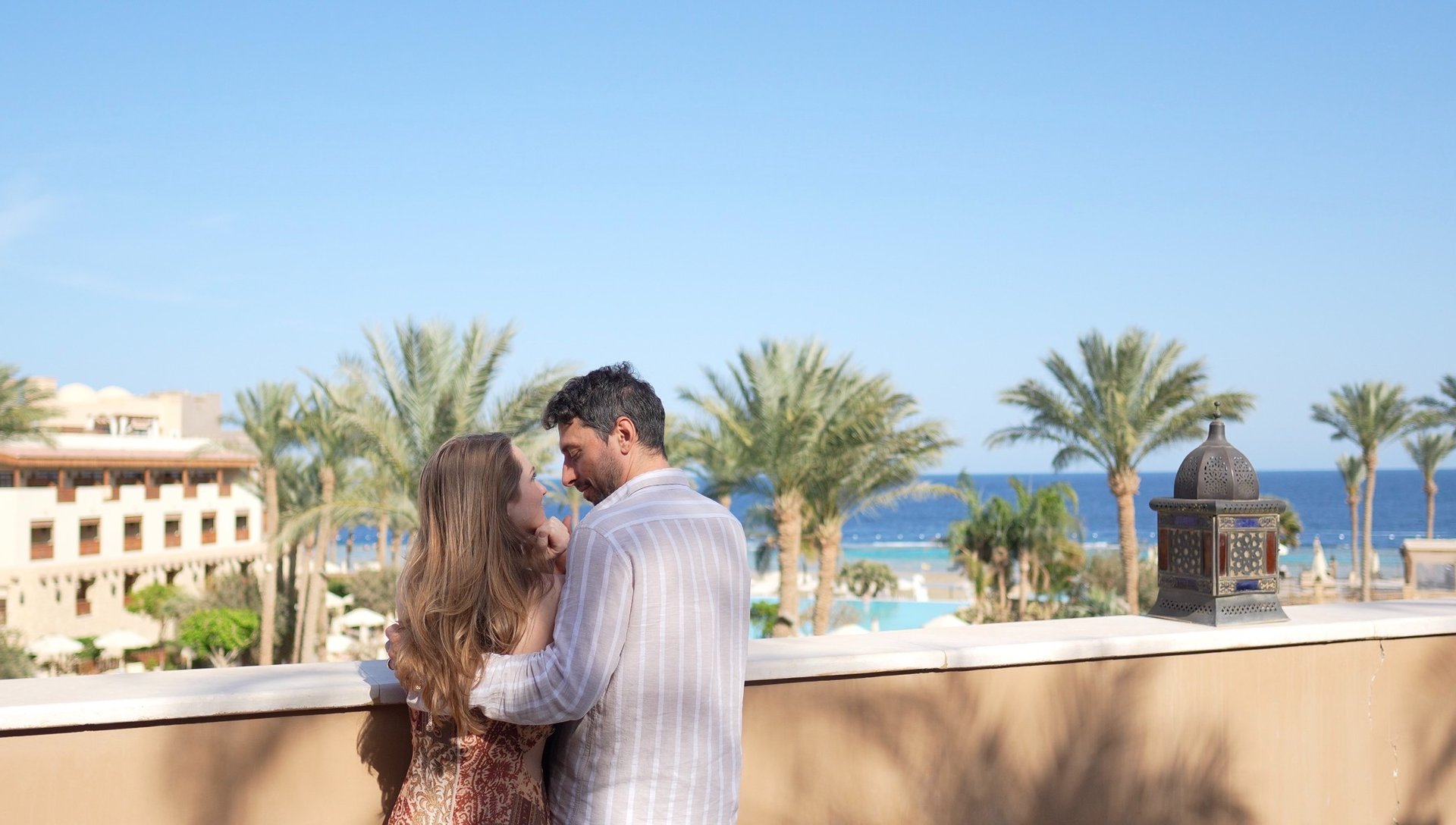
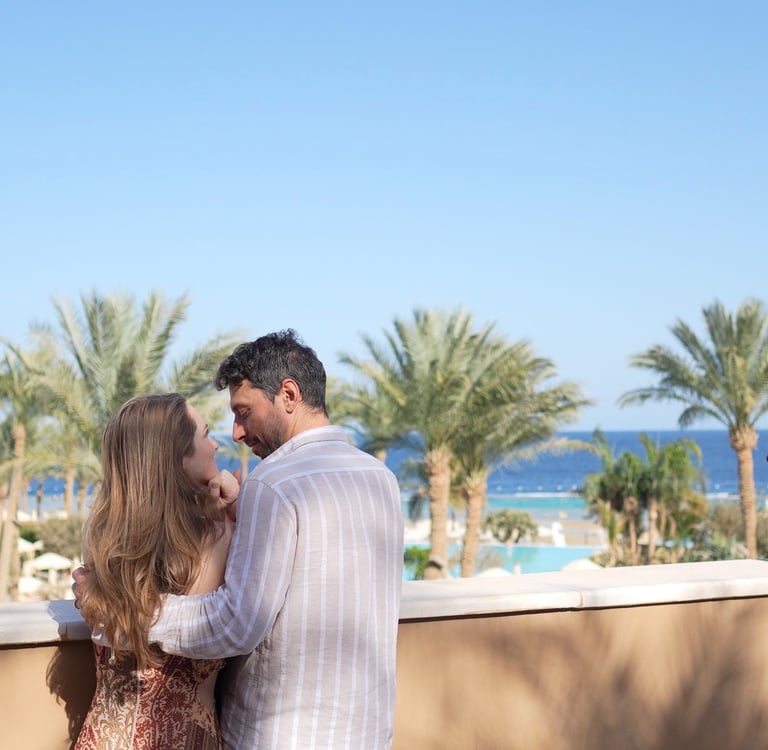
This is one Egypt. Polished, peaceful, designed to make you feel at ease.
We did not know yet how different the other one would feel.
Before we made that crossing, we wanted one day of proper adventure. It was not quite warm enough to snorkel, but warm enough to be outside and completely unbothered by that decision. So we cantered through the desert instead. Picked up right at the hotel gates, a private ride, then just us and our Austrian guide.
One minute you are on sand with nothing but desert around you, the next the horses are walking into the shallows of the Red Sea. No real explanation for how surreal that feels until you are actually in it. You can book our exact horseback riding experience here at GetYourGuide, or similar experiences on Viator.
Then we crossed the desert. And everything changed.
A word on timing, because it matters. We checked the travel warnings before we made the crossing. The US and Israel had begun striking Iran the week before we left, and the Middle East was holding its breath. We looked at the maps carefully. Parts of Egypt carry Level 4 warnings. Luxor did not. We did our research, made our decision, and got on the bus. And something about choosing to go anyway, to be in Egypt during Ramadan while the region around it was so tense, made everything that followed feel even more weighted.
Some trips you plan. Some trips find their moment in history without asking you first.
The bus ride takes about four and a half hours. For much of it there is nothing outside the window but sand and sky and the occasional military checkpoint. No signal. No noise. Just the desert doing what it has always done, which is make you feel very small and very aware that you are passing through something that belongs entirely to itself.
Then Luxor arrives, and it arrives all at once.
The bus had barely stopped when the doors opened and men pressed in from the outside, calling out, reaching, eyes scanning every face. We were sitting at the middle door. I am blonde. My husband was on his feet before I was, one hand already finding my arm. The noise and heat and motion of it all came in like a wave.
And then, through all of it, we heard our names.
Our driver was already there, already moving toward us, already steering us out of the crowd with the calm efficiency of someone who has done this a thousand times. The timing was extraordinary. One moment of chaos, then suddenly order, shade, a quiet car, and Luxor opening up around us.
That evening we sat on the terrace of the Sofitel Winter Palace and watched the sun go down over the West Bank
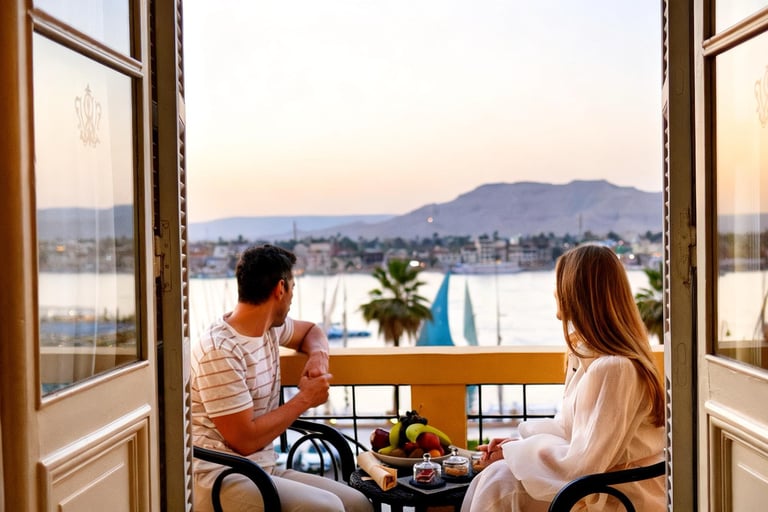
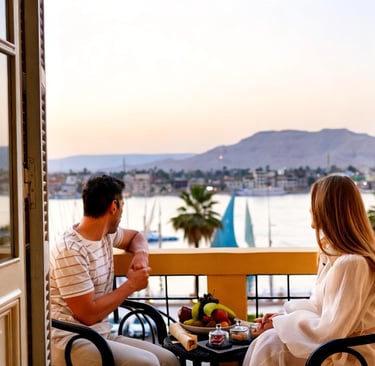
The ancient Egyptians divided their world along the Nile. The east bank, where the sun rises, was for the living. The west bank, where it sets, was for the dead. That is where we were looking. That is where we would be going in the morning, into the tombs of the Valley of the Kings.
I was not prepared for what that felt like. Something about the light, the weight of what lay across the river, the knowledge of what was waiting for us at dawn. I cried. Not from sadness exactly, but from the particular feeling of standing at the edge of something enormous and finally understanding where you are.
If you want to experience Luxor from a place like the Winter Palace, the kind of hotel that earns its history, we can help with that. As a travel agent, I know how to make sure you arrive with the right access, the right timing, and the right people around you.
We started the next morning early, in the Valley of the Kings, before the crowds arrived. No matter how many times you hear about this place, nothing prepares you for standing inside it. You feel it cannot be real. The paintings still vivid after three thousand years. The silence so complete it has a weight to it. My husband reached for my hand in one of the tombs and neither of us spoke.
Then the tour groups began to arrive and the spell started to lift, so we left.
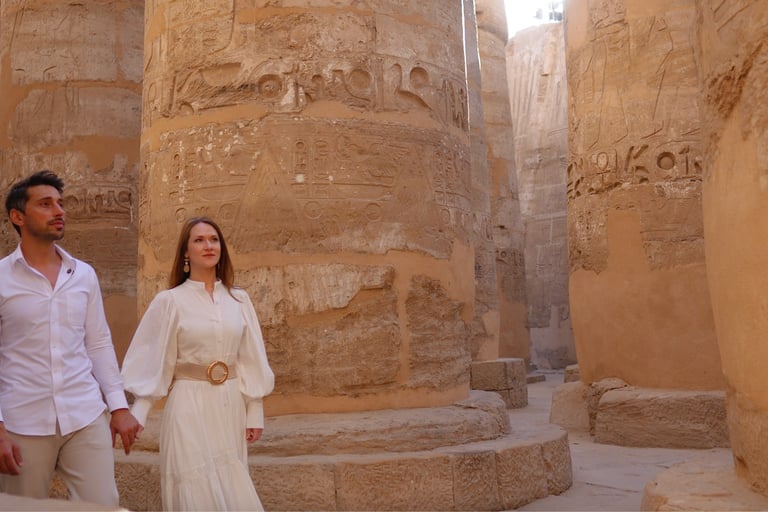
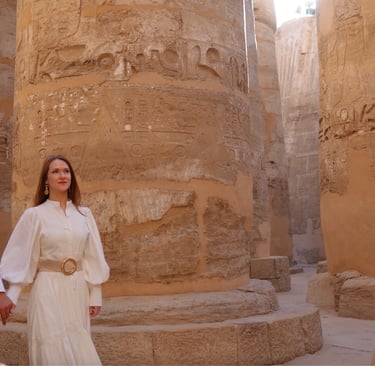
Karnak came next. Immense is the only word for it. We stayed until the staff ushered us out at closing, wandering through columns so tall they make you feel like a child. When we finally emerged into the evening heat, our driver was waiting. He steered us past the touts and the noise, directly to the riverside, just in time to board the felucca before the light changed.
The sun was dropping behind the West Bank the way it only does in Egypt, like the sky settling into something ancient. We were sitting on a felucca on the Nile, our guide and three young men managing the boat, the river going copper and gold around us.
Then the boat beside ours called out in Arabic. We had no dates to break the Ramadan fast, our guide told them. Before we could make sense of it, a second boat was cutting across the water toward us. A very young man at the oars. Holding dates.
Their moment. The most sacred moment of a Ramadan day. And they chose to share it with strangers.
We sat there, humbled by an invitation we hadn't earned and barely understood, as the call to prayer rose over the river. Then came the drums. Then the singing. Then somehow, dancing on the water at the edge of night.
Different beliefs, different lives, different languages. And yet there we all were, together on the Nile at nightfall, sharing the most sacred moment of someone else's day.
Makadi Bay gave us rest. Luxor gave us something harder to name. The two belong together in a way we didn't expect, two sides of a country that is far too large and layered to see in a single visit. We only scratched the surface. We already want to go back.
There are places that let you pass through. Egypt pulls you in.

